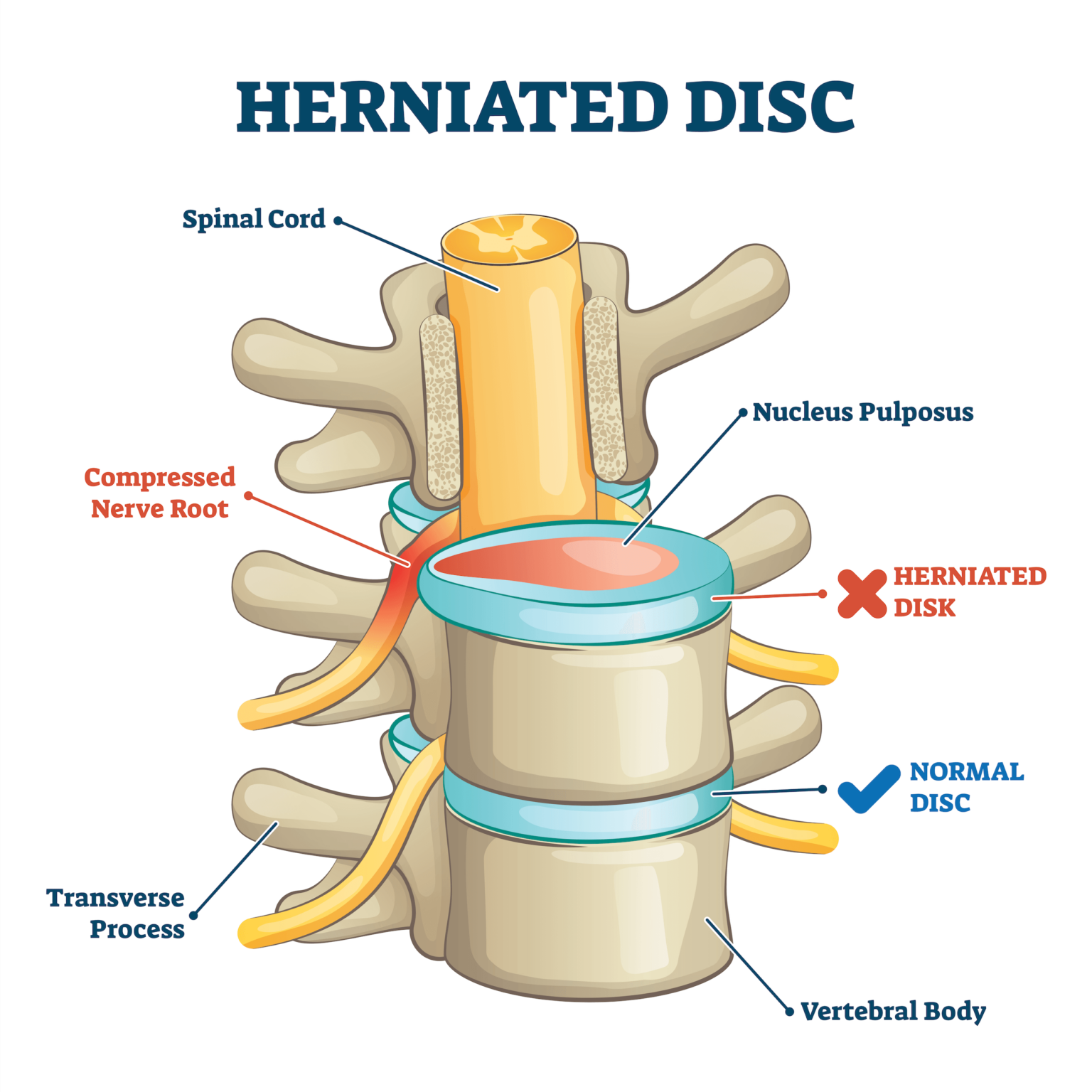
A herniated disc, also known as a slipped or ruptured disc, occurs when the soft center of a spinal disc pushes through a crack in the tougher exterior casing. This condition can lead to pain, numbness, or weakness in an arm or leg, depending on where the herniated disc is located. Understanding the causes, symptoms, and treatment options is crucial for effective management and recovery.
Herniated discs can significantly impact quality of life, but with proper diagnosis and a combination of treatments, most individuals experience relief. Early intervention, lifestyle changes, and adherence to medical advice are key to recovery and preventing future issues.